The life and work of pioneering animal behaviour scholar Jane Goodall, stretches from marvelling at the hens as a little girl in the 1930s England; to challenging the definition of what it means to be human through her research on chimpanzees in Tanzania. From there, she went on to become a United Nations Messenger of Peace.
One of Jane Goodall’s greatest reported gifts was her ability to make everyone, at any age, feel that they have the power to change the world. Her death on the 1st of October, 2025 at age 91, marks the loss of a globally recognised icon, whose gentle intelligence and commitment to understanding animals led to a life as a world-renowned scientist.
Discovering tool use in animals
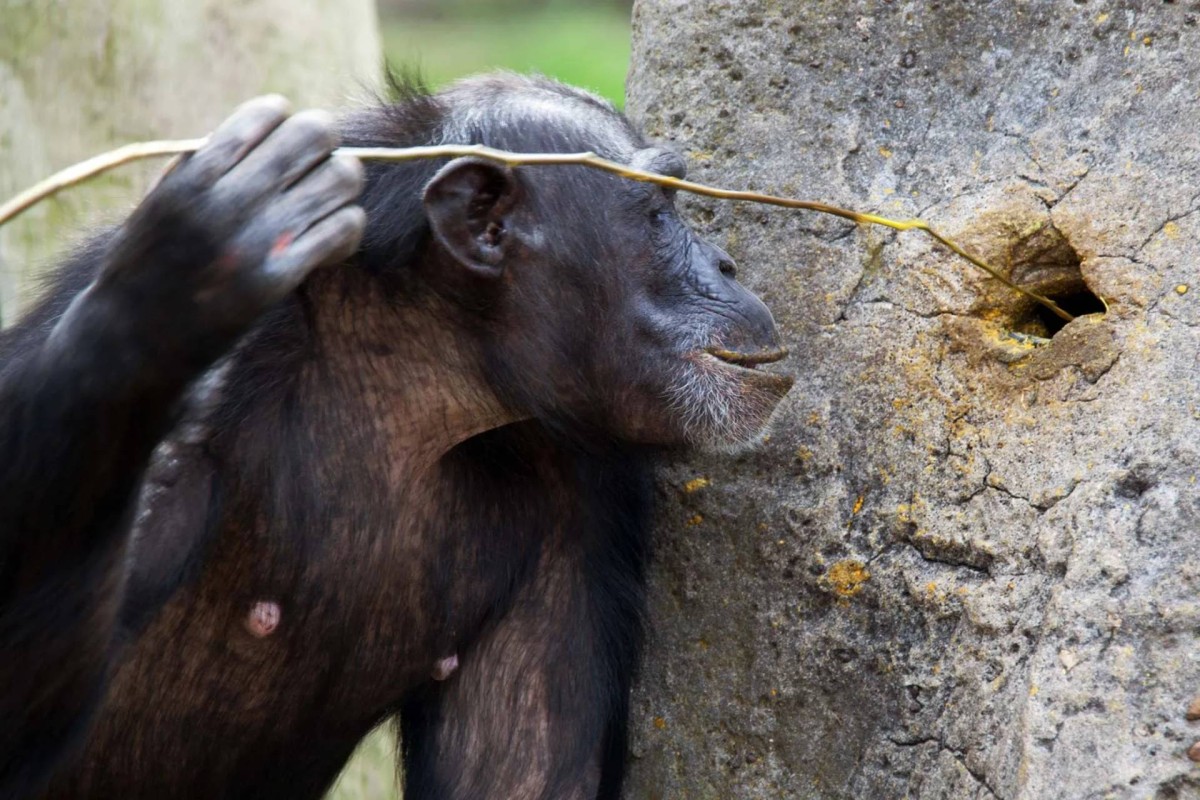
In 1960 after six months observing chimpanzees in Gombe Stream Game Reserve, now a National Park, Jane Goodall recorded one she affectionately named David Grey Beard, modifying a grass stem to “fish” for termites to eat. The adaptation of this grass into a primitive tool, immediately disproved the scientific community’s long-held belief that tool use was a uniquely human skill. This ground-breaking discovery altered how scientists differentiated between humanity and the animal kingdom.
Renowned anthropologist Louis Leakey chose Goodall to do this work precisely because she was not formally trained. When she arrived in Leakey’s office in Tanzania in 1957, at age 23, Louis initially hired her as his secretary, but soon spotted her potential and encouraged her to study chimpanzees. He wanted someone with a completely open mind, something he believed most scientists lost over the course of their formal training.
Because chimps are humans’ closest living relatives, Louis hoped that understanding the animals would provide insights into early humans. In a predominantly male field, he also thought a woman would be more patient and insightful than a male observer. During her 60 years of research, Jane also noted that the most successful chimp leaders were gentle, caring and familial. Males who tried to rule by asserting their dominance through violence, tyranny and threat did not last.
When Jane wrote up her observations of chimps using tools, Louis Leakey wrote: “Now we must redefine tool, redefine Man, or accept chimpanzees as human.”
Jane spoke of animals as having emotions and cultures and chimpanzee communities that were almost tribal. She named the chimps she observed, an unheard-of practice at the time, as scientists had traditionally numbered their research subjects.
Storyteller and teacher
Jane Goodall was an incredible storyteller and believed it was the most successful way to help people understand the true nature of animals. With compelling imagery, she shared extraordinary stories about the intelligence of animals, from apes and dolphins to rats and birds, even the octopus. Through her work, Jane inspired and advised world leaders, celebrities, scientists and conservationists. She also touched the lives of millions of children.
Through the Jane Goodall Institute, which works to engage people around the world in conservation, she launched Roots & Shoots, a global youth programme that operates in more than 60 countries. The programme teaches children about connections between people, animals and the environment and ways to engage locally to help all three.
For over six decades, Jane Goodall led the longest-running wildlife study in history and redefined conservation to include human communities.
“The greatest danger to our future is our apathy. Each one of us must take responsibility for our own lives and above all, show respect and love for living things around us, especially each other.” – Jane Goodall.