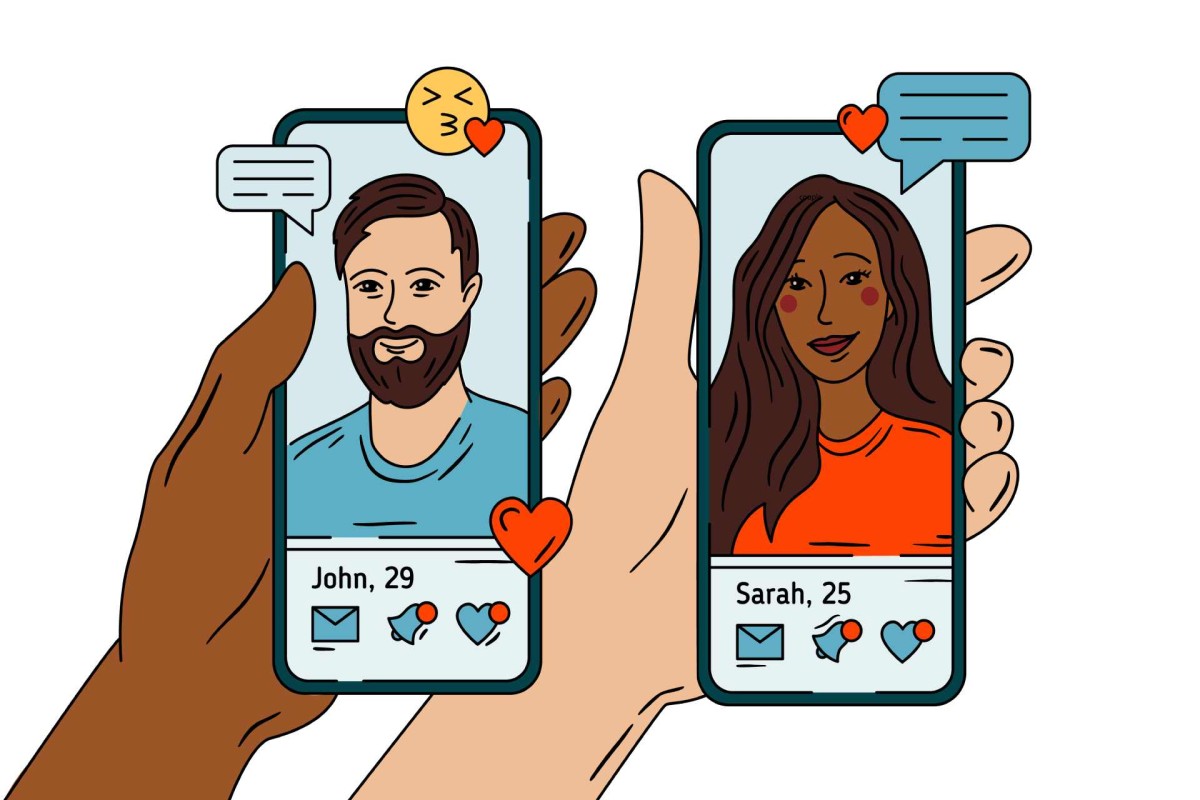

Online dating has recently adopted artificial intelligence. It can offer speedy, accurate matchmaking and help people figure out what they really want from a romance. A new report says that most online daters are willing to take it a step further.
Instead of AI being a tool to find the one, a new Norton Insights report says that half of current online daters would consider dating an AI, and a quarter of those surveyed even believed it possible to develop romantic feelings for one.
The idea of AI dating is now mainstream. AI systems are designed to be attentive, empathetic, and always available, qualities that can quickly foster attachment. Loneliness is up and online trust is down. It’s in this climate that people turn to the internet for comfort and intimacy.
32% of today’s online daters say they would use an AI chatbot for therapy after a heartbreak, and 34% of daters who have used AI for advice say they would trust an AI relationship coach more than a human friend or family member for relationship advice.
65% of dating app users said it’d bother them if they found out their match used AI to modify their pictures or draft chat replies. Still, online daters also indicated they’d use AI to help them develop their dating app profile (46%), enhance photos (39%), write a pick-up line (48%), go on virtual dates for them (29%), coach dating (43%), and practice flirting (38%).
There’s a paradox within this. Online trust is down, so people turn to AI for a personalised conversation tailored to them. But it’s that very AI that’s contributing heavily to the erosion of online trust.
“New Zealanders are finding it increasingly hard to trust the images, descriptions, and conversations they see while dating online, and even harder to trust the platforms that are meant to connect them with real people looking for genuine relationships,” says Mark Gorrie, VP APAC at Norton.
39% of current dating app users encounter suspicious profiles on at least a weekly basis. It’s harder than ever before to verify that who you’re talking to online is really looking for love. Further, it’s harder to know whether their images and descriptions accurately reflect them. Kiwis are using AI to enhance their profiles, yet they are bothered by it.
“AI has accelerated that breakdown in trust. It’s made it easier to manipulate images, fabricate identities, and deceive others at scale. AI is leaving New Zealanders second-guessing who, or what, they’re engaging with online. It is unsurprising that some are now looking to AI for intimacy.”
The rise of AI relationships and AI use in online dating creates new emotional and financial vulnerabilities for scammers to weaponise. The report says that threats rely on psychological and emotional manipulation. Dating scams are among the most prevalent, accounting for 90% of the digital threats people face. More than 17 million dating scams were blocked globally in the last three months of 2025 alone.
“When loneliness is high, trust can form very quickly online to fill that void, and that’s exactly what scammers rely on to exploit our need for love and companionship,” said Leyla Bilge, Global Head of Scam Research for Norton.
“As more people seek connection through apps, chatbots, and digital tools, it’s critical to pause, protect personal information, and remember that real trust should never come with pressure or secrecy. AI itself isn’t a scam, and many people find it genuinely feels supportive or comforting, but it’s still artificial, and there is no substitute for a real human connection.”
The report finds that 25% of current dating app users believe it’s possible to fall for an AI chatbot, while 28% believe an AI partner would be more emotionally supportive than a human one. 33% of current daters said they would consider engaging romantically with an AI-powered clone of their celebrity crush.
The report shows that 22% of current or past online daters say they have been targeted by a dating scam, and 30% of those daters targeted report falling victim. 33% of current daters also say they’ve been catfished, and 19% have experienced or been notified of another profile using their photos.
21% of daters reported being contacted by someone impersonating a celebrity or public figure. Among those targeted, 18% clicked on links they shared, 11% shared personal information, and 8% even sent money.
The study was conducted online within New Zealand from July 24th to 13th August 2025, among 1,000 adults aged 18 and older.