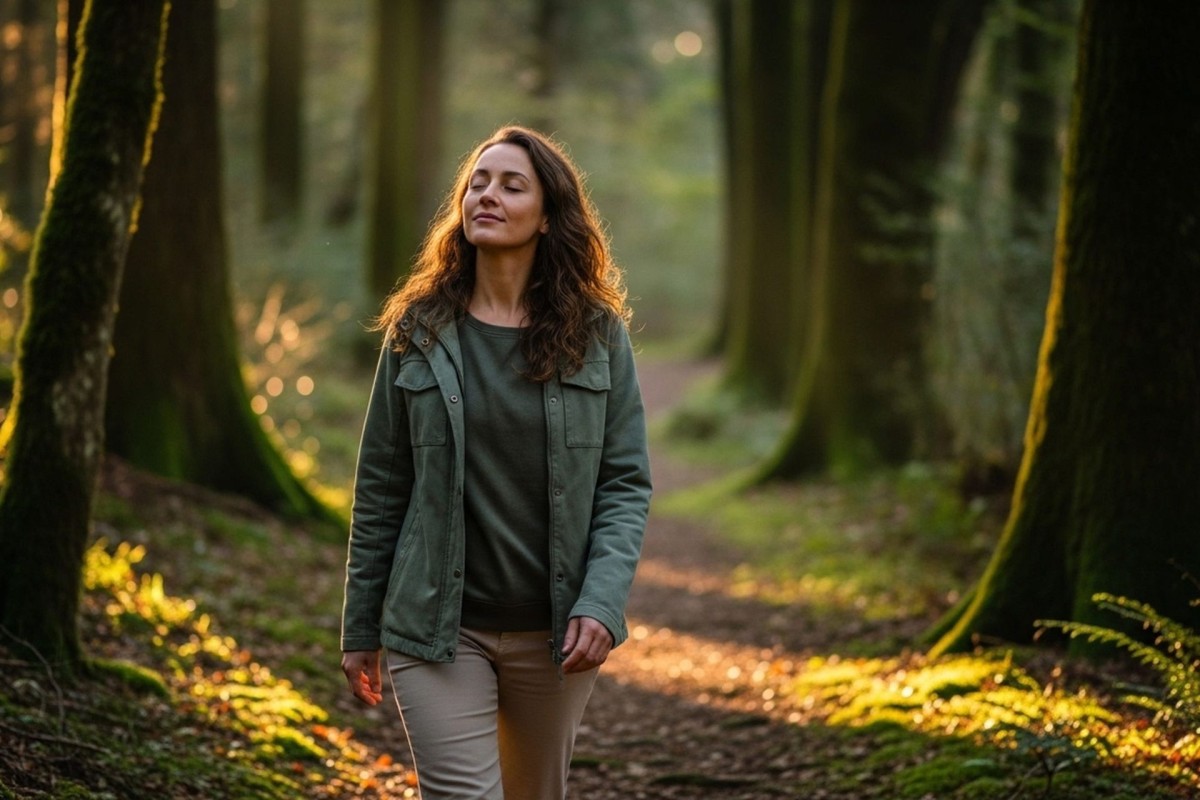

Many people spend most of the day indoors, looking at screens and rushing between tasks. Shinrin-yoku offers an easier pace of life. This Japanese term translates to “forest bathing,” but it doesn’t involve water. It means spending time in nature while paying attention to what you see, hear, and feel. This simple practice has been linked to strong benefits for both physical and mental health.
What is shinrin-yoku
Shinrin-yoku began in Japan in the 1980s as a health practice. Doctors and researchers encouraged people to spend time in forests to reduce stress and improve wellbeing. The idea is not exercise or hiking for fitness. Instead, the focus is on slowing down and taking notice of the natural world.
You might walk slowly through trees, or sit and listen to the birds. Surrounded by the slow pace of nature, you can take a deep breath and notice the smell of leaves or the feeling of fresh air around you. The goal is to be present in the moment. This mindful approach helps calm the nervous system.
Benefits for mental health
Spending time in nature has been shown to reduce stress. Studies from Japan have found that people who walk in forests have lower cortisol levels. Cortisol is the hormone linked to stress. Lower levels can help people feel calmer and more relaxed.
Nature bathing can also help with anxiety and low mood. Quiet surroundings allow the mind to slow down. Natural settings offer an opportunity for the mind to rest. Many people report feeling clearer and more focused after time outdoors.
Researchers also link time in nature to improved attention. Green spaces give the brain a break from concentration. This makes it easier to focus later. For people who feel tired or overwhelmed, even a short walk outside can ease the mind.

Benefits for physical health
Shinrin-yoku does not require hard exercise, yet it still helps the body. Walking slowly improves circulation while fresh air supports healthy breathing and exercise. Exploring the forest is an inspiring way to engage your senses.
Studies in Japan have also shown that time in forests may support the immune system. Trees release natural oils called phytoncides. These compounds may help trigger the body’s immune response, which helps us to heal naturally. Researchers found that the effect can last for several days after time in nature.
Spending time outside can also improve sleep. Natural light helps regulate the body clock. People who get daylight during the day often fall asleep more easily at night.
Slowing down in a busy world
One of the biggest benefits of nature bathing is the chance to slow down. Many people move from one task to the next without a break. Shinrin-yoku encourages us to let go of focusing on our goals and deadlines and focus instead on simply being.
Notice the sound of the wind in the trees. Look at the patterns of leaves or clouds. Feel the ground under your feet. These small moments help bring attention back to the present.
Practising this kind of awareness can reduce mental fatigue. It also helps people feel more connected to their surroundings. This sense of connection is linked to greater wellbeing.
Making nature part of everyday life
You don’t need a forest to practise shinrin-yoku. Parks, beaches, gardens, and walking tracks are all good places to go. The key is to slow down and pay attention. Leave headphones behind. Put your phone away if possible and walk at a slower pace.
If your time is limited, even ten minutes outside can improve your mood. Regular time in nature often has the strongest effect. Making it part of a weekly routine can support both mental and physical health.
A simple way to feel better
Shinrin-yoku is a simple way to nurture your wellbeing. It helps the body relax and gives your mind a sense of spaciousness.
In a world that rarely slows down, nature gives us a place to pause. When we take time to notice the trees, the air, and the light around us, we give ourselves a chance to reset. That moment of calm can make the rest of life feel easier.